
uPVC and WPC Doors in Abu Dhabi
uPVC windows and doors specified for Gulf sun, and WPC doors for bathrooms and utility rooms that will not swell — supplied and installed by the same team that fabricates our aluminium.
Why Some uPVC Goes Yellow Here and Some Does Not
uPVC does not fail in this climate because it is uPVC. It fails because of the grade. The white pigment in the profile is titanium dioxide, and it is also what gives the material its UV stability — profiles built for hot, high-UV regions carry a noticeably higher loading than profiles built for European weather. A properly specified profile holds its colour and stays dimensionally stable; a cheap or heavily recycled one chalks, yellows and goes brittle.
Ask any supplier what the profile is stabilised for. It is the single question that separates a window that still looks right in ten years from one that does not.
Dark surfaces run hotter in this sun, so coloured profiles need a heat-modified compound. We flag it at quote stage rather than after installation.
uPVC and WPC Doors: Built for Bathrooms and Utility Rooms
A WPC sliding pocket door we installed in an Abu Dhabi villa — the leaf slides into the wall, so it needs no swing space at all.
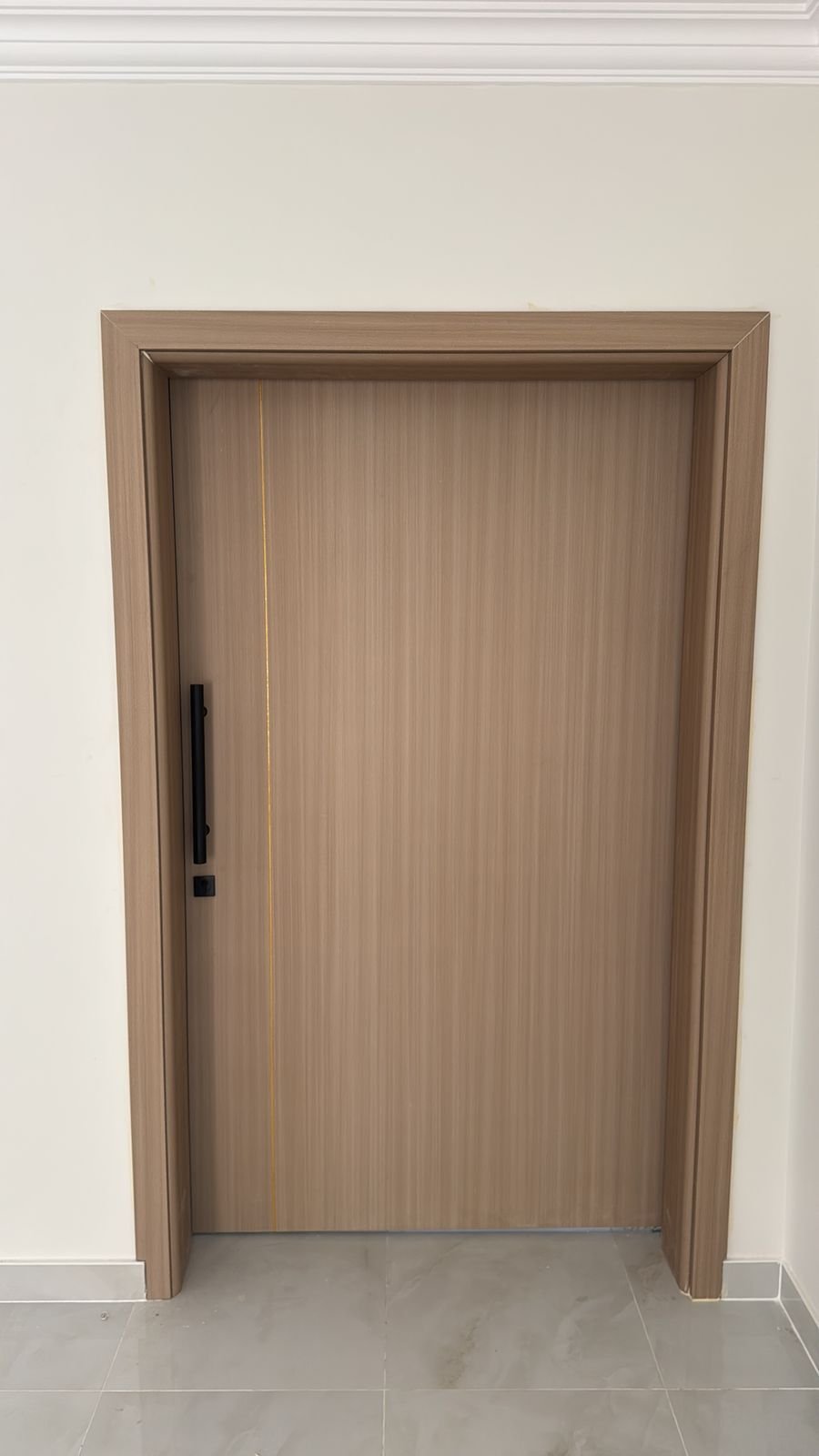
WPC is wood plastic composite — wood fibre bound in a polymer. It takes hinges, handles and a laminate finish like timber, but it does not absorb water, so it will not swell or rot, and termites have no interest in it.
That combination is why we use it for internal doors in bathrooms and utility areas, where a solid timber or MDF-core door eventually swells at the bottom edge and stops closing properly.
Bathrooms, utility rooms, kitchen back doors, maid’s rooms — anywhere the door meets steam or splashing daily. For dry internal doors, timber is still perfectly fine and we will say so.
01Is uPVC any good in Abu Dhabi heat, or does it go yellow?
It depends entirely on the grade. uPVC is UV-stabilised with titanium dioxide, and profiles made for hot, high-UV regions carry a higher TiO&sub2; loading than the ones made for European weather. A profile specified for this climate holds its colour; a cheap or recycled one is what goes chalky and yellow. That is the question worth asking any supplier.
02uPVC or aluminium — which should I choose?
uPVC insulates well by nature and costs less on smaller openings, so it suits standard bedroom and bathroom windows. Aluminium is stronger, so it carries larger panes on slimmer sightlines and is the practical choice for wide sliding doors, full-height glazing and shopfronts. We fit both and decide on your actual openings at the site visit.
03What is a WPC door made of?
Wood plastic composite — wood fibre bound in a polymer. It behaves like timber for fixing hinges and handles, but it does not absorb water, so it will not swell or rot. That is why we use it for bathroom and utility doors rather than solid timber.
04Will a WPC door swell in a bathroom?
No. That is the specific reason it exists. A solid timber or MDF-core door in a wet room eventually swells at the bottom edge and stops closing; WPC does not absorb the moisture in the first place.
05Can uPVC windows be made in colours other than white?
Yes, though darker finishes need a heat-modified compound because dark surfaces run hotter in this sun. We will tell you at quote stage whether the colour you want is sensible for the elevation it is going on.
06Do you supply uPVC, or try to sell me aluminium instead?
We supply and install it. If uPVC is the right answer for your opening we will say so rather than talking you into the more expensive system.