
Aluminium Windows in Abu Dhabi
We make thermally broken and standard aluminium windows in our own Musaffah workshop, then fit them ourselves. Three things decide whether a window works here — the frame, the glass and the drainage. Get one wrong and you will notice.
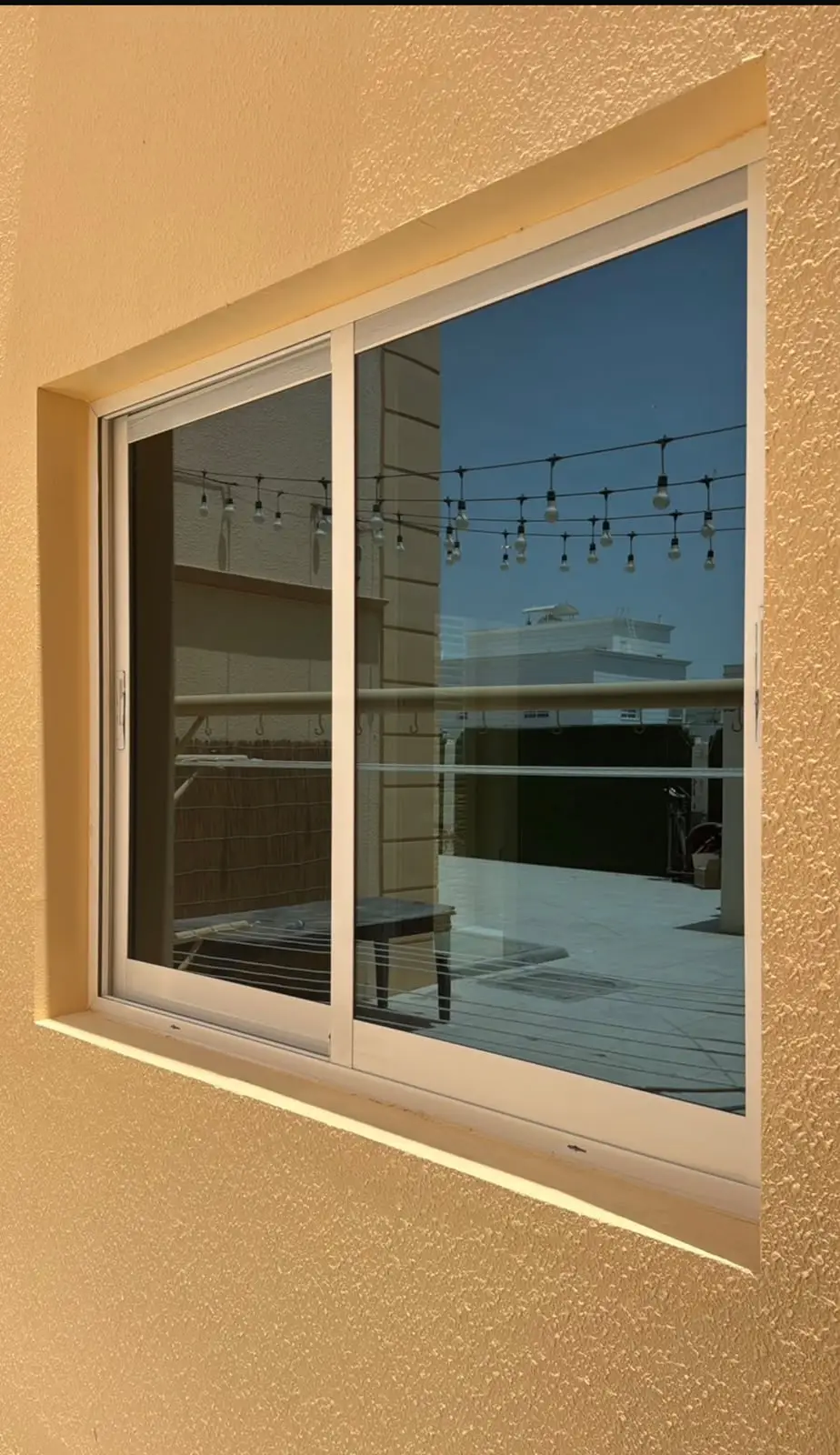
What “Thermally Broken” Really Means
Aluminium moves heat brilliantly. Great for a saucepan, awful for a window frame in August. So a thermally broken profile is cut in two — an outer half and an inner half, joined by a continuous polyamide bar. The heat landing on the outside has no metal path to the inside.
That is why the same glass in two different frames gives you two different rooms. And it is why the frame is the part people skip: everyone talks about the glass, then buys the cheapest profile and wonders why the room is still hot.
There is a rule behind it too. Abu Dhabi’s Estidama Pearl Rating System wants window frames thermally broken and/or under 3.5 W/m²K. If your project is chasing a higher Pearl rating through the RE-2 Cool Building strategies, the target tightens to an area-weighted U-value of 1.9 W/m²K or better, with SHGC capped at 0.3.
If a quote does not say whether the profile is thermally broken, assume it is not. That is usually the whole price gap between two windows that look identical.
U-Value Blocks Heat. SHGC Blocks Sunlight.
Two numbers, two different jobs — and here the second one usually matters more. U-value is heat conducted through the window. SHGC is how much of the sun’s radiant energy comes straight through the glass. A window can have a perfectly respectable U-value and still turn a west-facing bedroom into an oven, because the SHGC is high.
Two panes with a sealed cavity between them. Put a low-E coating on it, in a thermally broken frame, and the whole window usually lands somewhere around 1.6–2.0 W/m²K.
A metallic layer so thin you cannot see it, bouncing long-wave heat back out while letting daylight through. This is what pulls the SHGC down without making the room gloomy.
Heat-treated, several times stronger than ordinary glass, and it breaks into blunt granules instead of blades. Standard safety practice in doors, low-level glazing and big panes.
Two panes bonded to an interlayer. Stays in one piece when broken, cuts noise noticeably, and it is what we would put on a road-facing or upper-floor window.
| Thermally broken aluminium | uPVC | |
|---|---|---|
| Insulation | Good — needs an engineered polyamide thermal break to achieve it | Better as a material; multi-chamber profile insulates without a break |
| Strength | High — carries more glass in a slimmer frame | Lower; larger frames need galvanised steel reinforcement inside |
| Best for | Wide spans, heavy sashes, slim sightlines, commercial specs | Standard villa windows, bathrooms, utility rooms |
| Cost | Higher | Lower |
| Estidama | Frame must be thermally broken and/or under 3.5 W/m²K | Meets it with a multi-chamber profile and low-E glazing |
Four Things We See Go Wrong
Drainage that is blocked or was never there
Aluminium windows are meant to let a little water in and drain it back out through weep channels. Undersized, full of sand, or sealed over by whoever installed them — and the water has nowhere to go but inside.
Gaskets that go hard
The rubber seals do the actual weathersealing, and they sit in direct sun for years. Cheap compounds harden, shrink and pull out of the corners. The window looks fine and lets in air, dust and noise.
Sand in the tracks
Sand is an abrasive. On a slider it grinds the roller and the track together until the sash drags. Decent stainless or nylon rollers in a drained track cope; bargain hardware does not.
A bad joint at the reveal
A well-made window in a badly prepared opening still leaks. The perimeter joint, the backer rod, the sealant — this is where a rushed install shows up first, usually in the first proper rain.
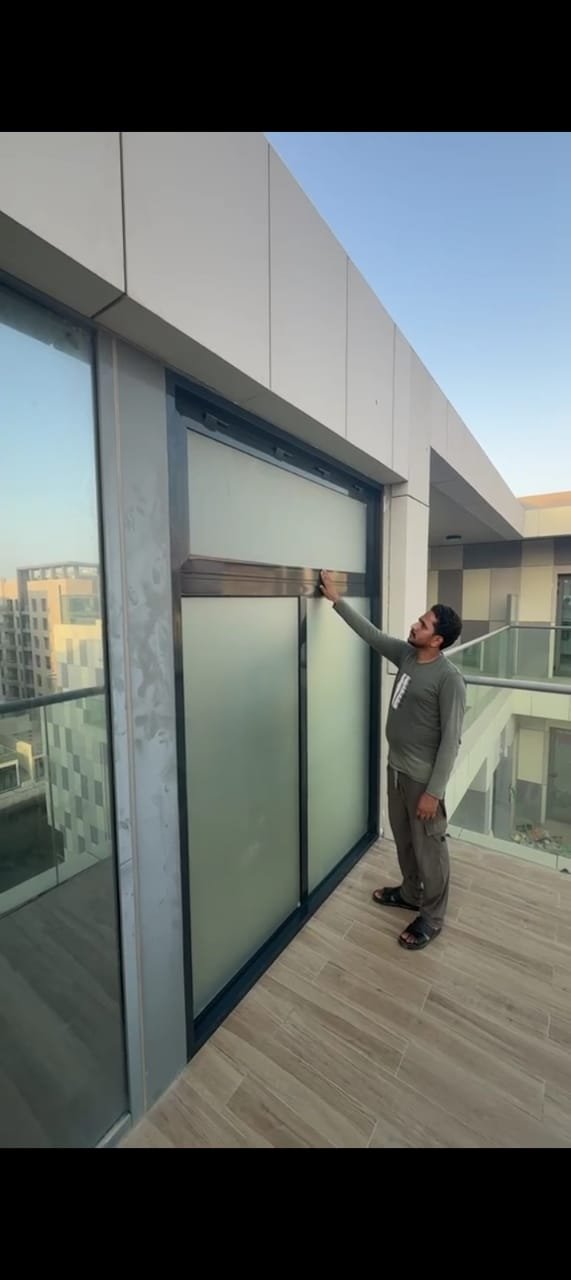
Sliding, Casement or Tilt-and-Turn?
How a window opens changes how well it seals, more than most people expect. A slider seals by brush and overlap — convenient, space-saving, never truly airtight. A casement swings out and squeezes onto a gasket, so it seals far better against dust and noise. Tilt-and-turn does both jobs: tilt it for ventilation you can leave unattended, turn it fully open to clean the outside from inside. That last part matters more than it sounds once you are above the second floor.
We make all three ourselves, so what we recommend depends on your elevation, your exposure and how you actually use the room — not on what is easiest for us to order in. Have a look at the rest of our aluminium work, or the glass side if you need both.
Sometimes uPVC Is the Better Buy
uPVC insulates better than aluminium as a material, and it costs less. For a lot of villa windows, that is simply the better deal and we will tell you so. Aluminium earns its money when the span is wide, the sash is heavy, the sightline needs to be slim, or the building specification asks for it — because it is stronger and can carry more glass in a thinner frame. If your job is a straightforward window replacement, have a look at uPVC doors and windows before you decide.
Aluminium Windows Across Abu Dhabi
We fabricate and fit aluminium windows for villas, apartment buildings and commercial units, and we do the fabrication ourselves rather than subcontracting it. We work right across the emirate — Khalifa City, Mohammed Bin Zayed City, Al Reef, Al Reem Island, Saadiyat Island and Yas Island.
Send us the opening sizes, the floor, and which way the windows face. That is usually enough for us to quote without coming out.→01Are thermally broken windows worth the extra money in Abu Dhabi?
For any air-conditioned room getting real sun, yes — otherwise the frame is a heat pipe straight into the space. There is a compliance side too: Estidama wants frames thermally broken and/or below 3.5 W/m²K, and a higher Pearl rating tightens that further. On a shaded north elevation or an unconditioned store, the case is much weaker and we will say so.
02What is the difference between U-value and SHGC?
U-value is heat conducted through the whole window — lower is better. SHGC is the share of the sun’s radiant energy that gets through the glass — also lower is better here. In this climate SHGC is usually the number to watch, because most of what makes a sunlit room uncomfortable is radiant heat, not conducted heat.
03Does double glazing actually help here?
Yes, but the coating does more of the work than the gap does. A sealed double-glazed unit with a low-E coating cuts both conducted heat and solar gain. Plain double glazing with clear glass and no coating helps far less than the price suggests.
04Why is my window leaking when it rains?
Nine times out of ten it is drainage, not the glass. The frame is designed to take in a little water and drain it back out through weep channels — blocked with sand, or sealed over at installation, and it has nowhere to go. The other usual suspect is a failed seal where the frame meets the wall.
05Sliding or casement — which seals better?
Casement, clearly. It compresses onto a gasket when you close it. A slider seals by brush and overlap, which is inherently leakier for air, dust and sound. Sliders win on space. If dust or road noise is your main complaint, go casement or tilt-and-turn.
06Do you actually make the windows yourselves?
Yes. We cut, fabricate and assemble in our own workshop in Musaffah M-25 under licence CN-5806439, and our team installs. That is why we can hold a size or a detail that a reseller would have to send back to their supplier and wait on.